Introduction
The Golden Barrel Cactus (Echinocactus grusonii) is one of the world’s most iconic and instantly recognizable cacti. Its striking, ribbed spherical form and dense covering of golden spines make it a favorite among collectors, xeriscape gardeners, and indoor plant enthusiasts alike. Often called “the mother of barrels,” this cactus brings dramatic architectural interest to a garden or sunny interior space.
Native to the deserts of central Mexico, the Golden Barrel thrives in bright light, excellent drainage, and an overall dry environment. Although slow‑growing, with the right care this species can live for many years and form impressive clumps. This guide provides clear, practical instructions for growing and maintaining a vibrant, resilient Golden Barrel Cactus.
Golden Barrel Cactus Care Summary
Care Aspect Recommendation Light Bright light with several hours of direct sun Soil Fast‑draining cactus/succulent mix Watering Infrequent soak‑and‑dry routine Temperature 65–90°F (18–32°C) in growing season; above 50°F (10°C) in winter Fertilization Diluted cactus fertilizer in growth months Propagation Offsets or seeds Common Issues Rot, pests, sunburn from abrupt exposure Species Overview: A Desert Classic
Echinocactus grusonii grows naturally in the dry, rocky hill regions of central Mexico, where it endures intense sunlight, long dry spells, and dramatic temperature swings between day and night. These pressures shaped its spherical structure and thick ribs, adaptations that help conserve water and protect the growing center.
In cultivation, this cactus is admired both for its sculptural form and its forgiving nature. With consistent light, well‑draining soil, and proper watering routines, Golden Barrel Cactus becomes a long‑lived and eye‑catching addition to any collection.
Light Requirements: Bright and Steady
Golden Barrel Cactus thrives in bright light and performs best when it receives several hours of direct sunlight daily:
Indoors: Place near a south‑ or west‑facing window with strong, uninterrupted light.
Outdoors: Full sun locations are ideal; morning sun and light afternoon shade help prevent heat stress in very hot climates.
Insufficient light leads to weak, pale, and elongated growth — a condition known as etiolation.
Soil and Potting: Drainage Above All
The key to healthy cactus roots is fast water movement and air circulation. Use either:
A quality cactus or succulent potting mix, OR
A custom blend such as:
40% potting soil
30% coarse sand
20% perlite or pumice
10% fine gravel
Always use a pot with good drainage, especially for indoor plants. Terracotta or unglazed ceramic helps soil dry faster between waterings.
Watering: Desert Logic
Follow a soak‑and‑dry watering routine:
Water deeply, allowing excess to drain out the bottom.
Let the soil dry completely before watering again.
Growing season (spring–summer): Water every 10–14 days depending on light and temperature.
Dormant season (fall–winter): Water much more sparingly — often once a month or less — to prevent rot.Overwatering is the most common care mistake with barrel cacti and can quickly lead to root and stem rot.
Temperature and Seasonal Rhythms
Ideal temperature: 65–90°F (18–32°C).
Minimum safe winter temperature: Above 50°F (10°C).
Golden Barrel Cactus enjoys warm days and cooler nights (but not frost). In outdoor gardens where frost is possible, protect the plant or grow it in a container that can be moved indoors during cold spells.
Fertilization: Light and Strategic
Feed sparingly during the active growing season (spring through early summer) with a diluted cactus fertilizer every 4–6 weeks. Avoid overfeeding, especially high‑nitrogen fertilizers, which can lead to soft, weak growth.
Do not fertilize in the dormant months.
Propagation: Offsets and Seeds
Golden Barrel Cactus can be propagated by:
Offsets (pups): Many mature clumps produce small offshoots. Use a clean, sharp tool to separate offsets and allow them to callus before planting in a fast‑draining mix.
Seeds: Sow in a well‑draining medium with bright light and warm temperatures; germination may take several weeks.
Offset propagation is faster and more reliable for clumping barrel specimens.
Common Problems & Solutions
Rot from overwatering
Symptom: Soft, discolored stem or base
Solution: Repot in a dry, well‑draining mix; hold off watering
Sunburn or bleaching
Symptom: Pale, bleached areas on the ribs
Solution: Gradual acclimation to strong sun; avoid sudden exposure
Pests (scale or mealybugs)
Symptom: Small hard bumps or cottony clusters
Solution: Isolate plant; treat carefully with a suitable insect control method
Effective care depends on consistent dryness, good airflow, and strong light.
FAQ
Q: How much sunlight does Golden Barrel Cactus need?
A: It thrives with several hours of direct sunlight daily; full sun locations are ideal when possible.Q: How often should I water my Golden Barrel Cactus?
A: Water thoroughly, then wait until the soil is completely dry before watering again — especially in winter.Q: What soil is best for a barrel cactus?
A: Use a fast‑draining cactus or succulent potting mix with coarse sand, perlite, or gravel.Q: Can I grow this cactus outdoors?
A: Yes, in frost‑free climates with full sun and good air circulation.Q: Will Golden Barrel Cactus produce offsets?
A: Mature plants often produce offsets that can be separated and rooted.Q: Is this cactus pet‑safe?
A: While not considered toxic, its sharp spines can cause injury. Keep out of reach of pets and children.
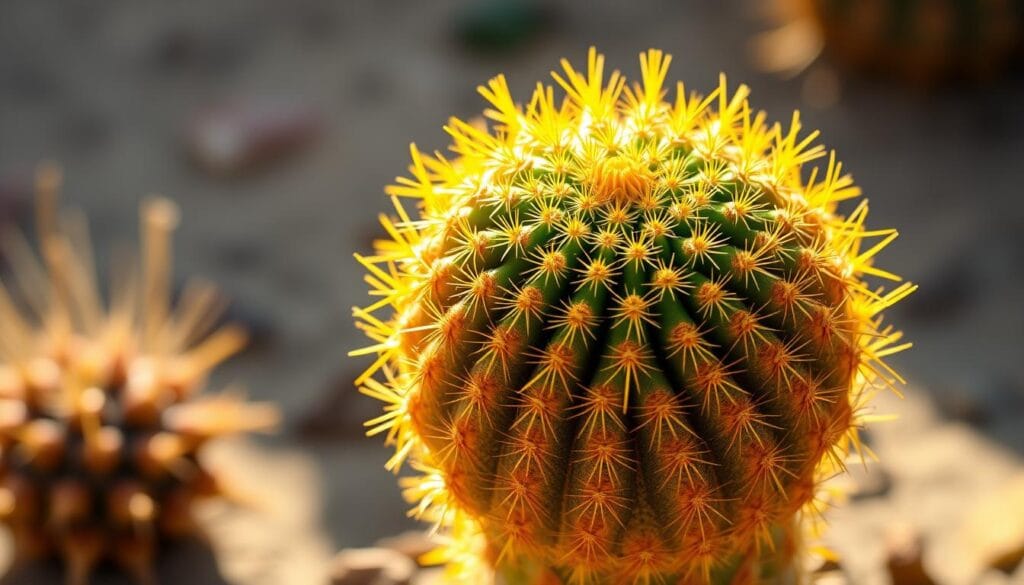
Golden Barrel Cactus Care Guide (Echinocactus grusonii): Grow, Water & Maintain This Iconic Desert Sphere
Post navigation
Previous Post
 Seattle Garden Pond Ideas: Tranquil Backyard Oasis