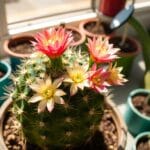
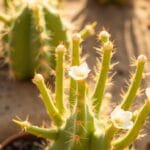
The Star Cactus (Astrophytum asterias) is a striking and unique succulent prized for its symmetrical, star-like shape, smooth surface, and beautiful blooms that appear in spring and early summer. Native to parts of Texas and northeastern Mexico, this cactus is both a desert plant and a popular choice for indoor cactus collections thanks to its low maintenance and ornamental appeal.
## Understanding the Star Cactus
Star Cactus is a slow-growing, small cactus with a remarkably symmetrical body. Typically spineless and adorned with delicate white flecking or small patterns, it can grow up to about 2–6 inches (5–15 cm) wide, making it perfect for container gardens or desktop displays. Its flowers range from yellow to shades of orange or pink and usually bloom from late spring through early summer.
## Light Requirements
The Star Cactus thrives in bright light and plenty of sunlight. Ideally, place it where it will receive 6+ hours of direct or bright sun each day — a south-facing window works especially well indoors. Too much shade can lead to weak growth and minimal flowering, while harsh midday sun in very hot climates may scorch the plant.
## Temperature & Humidity
Star Cactus prefers warm temperatures typical of desert climates:
– Ideal: 65–80 °F (18–27 °C)
– Can tolerate cooler temperatures down to about 20 °F (-6 °C) in dry conditions
Protect from frost and prolonged cold below freezing. Star Cactus does not require high humidity and thrives in average indoor humidity conditions.
## Soil & Potting
Well-draining soil is essential. Use a cactus/succulent mix enhanced with coarse sand, perlite, or pumice. A recommended mix:
40% potting soil + 40% coarse sand + 20% perlite or pumice.
Always use pots with drainage holes to prevent water accumulation.
## Watering Guidelines
Use the “soak and dry” method: water thoroughly and then allow the soil to dry completely before watering again. During the growing season (spring/summer), water every 2–4 weeks depending on indoor conditions. In winter, reduce watering significantly. Root rot is the most common threat.
## Fertilizing Your Cactus
During active growth (spring/summer), fertilize once a month with a balanced, low-nitrogen cactus fertilizer diluted to half strength. Avoid fertilizing in fall and winter.
## Propagation
Star Cactus is usually propagated by seeds. Sow in a well-draining mix, maintain warmth and bright light, and keep soil lightly moist until germination (several weeks). Grafting is used for rare cultivars but is less common.
## Common Pests & Diseases
– Mealybugs
– Scale insects
– Spider mites
– Root rot from overwatering
Treat pests with neem oil or insecticidal soap and ensure excellent drainage.
## Seasonal Care: Winter Dormancy
In winter, water sparingly, avoid fertilizing, and keep in bright light but cooler temperatures. This mimics natural desert dry seasons.
## FAQ
**What light does a Star Cactus need?**
Bright light with several hours of direct sun daily, avoiding scorching midday rays.
**How often do I water Star Cactus?**
Use the soak-and-dry method. In summer, every few weeks; in winter, much less.
**What soil is best?**
A well-draining cactus mix with sand, perlite, or pumice.
**Can Star Cactus be propagated easily?**
Yes — most commonly from seeds, planted in well-draining soil and kept warm.
**Is Star Cactus pet-friendly?**
Yes — non-toxic and spineless varieties reduce handling hazards.