Growing healthy cacti starts below the surface. While light and watering often get the most attention, cactus soil is the single most important factor in preventing rot, encouraging strong roots, and supporting long-term growth.
Cacti evolved in harsh, fast-draining environments where water never lingers around the roots. Standard potting soil does the opposite — it retains moisture, compacts easily, and suffocates roots. This guide explains exactly what cactus soil is, why it matters, and how to choose or make the perfect mix for both indoor and outdoor cacti.
What Is Cactus Soil?
Cactus soil is a well-draining, airy growing medium designed to dry quickly while still providing structure and minimal nutrients. Unlike regular garden soil, cactus soil prioritizes:
- Fast water drainage
- High oxygen flow to roots
- Low organic matter
- Resistance to compaction
In nature, most cacti grow in rocky, sandy, or mineral-rich soils, not rich loam.
Why Regular Potting Soil Is Bad for Cacti
Using standard potting soil is one of the most common reasons cacti fail. Traditional mixes:
- Hold moisture for too long
- Compress around roots
- Encourage fungal growth
- Lead to root rot and collapse
Even drought-tolerant cacti cannot survive if their roots stay wet.
The Ideal Cactus Soil Characteristics
High-quality cactus soil should meet all of the following criteria:
- Excellent drainage – water passes through quickly
- Loose texture – roots can breathe
- Low organic content – avoids soggy conditions
- Slightly acidic to neutral pH (around 5.5–7.0)
- Mineral-heavy composition
Soil requirements can vary by species. Epiphytic cacti such as the Fishbone Cactus prefer a lighter, more organic mix, while classic desert species like the Golden Barrel Cactus require extremely fast-draining, mineral-heavy soil.
Different cacti species have slightly different soil preferences based on their natural habitats. Below are examples of how soil requirements vary across common cacti, linking to detailed care guides for each species.
Epiphytic and Jungle Cacti
Species like the Fishbone Cactus, Queen of the Night, Christmas Cactus, and Easter Cactus grow in tree canopies rather than desert soil. They prefer a lighter, organic-rich mix that drains well while retaining some moisture.
Desert and Large Cacti
Iconic desert species such as the Golden Barrel Cactus, Saguaro Cactus, Organ Pipe Cactus, and Peyote Cactus need a mineral-rich, very well-draining soil mix to prevent root rot.
Mammillaria and Small Clustering Cacti
Compact species like the Ladyfinger Cactus, Pincushion Cactus, Fishhook Cactus, and Old Lady Cactus thrive in gritty mixes that allow the soil to dry quickly between waterings.
Special and Grafted Cacti
Unique species such as the Moon Cactus, Bunny Ears Cactus, Fairy Castle Cactus, and the Dragon Fruit Cactus may require tailored soil mixes depending on their growth habit or grafting needs.
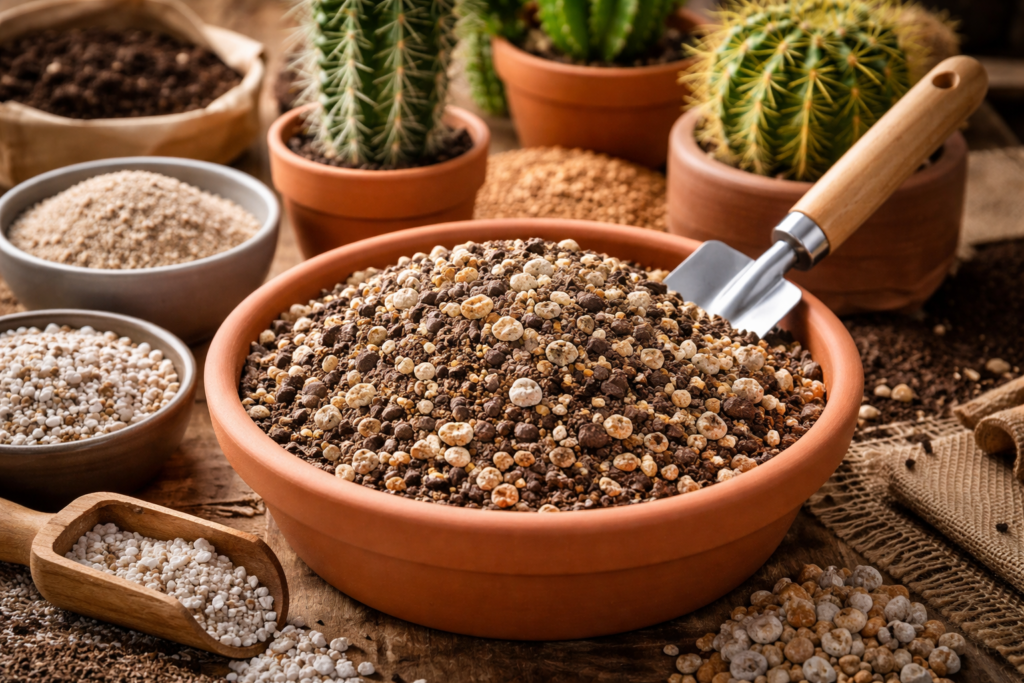
Best Cactus Soil Components Explained
| Component | Purpose |
|---|---|
| Coarse sand | Improves drainage and structure |
| Perlite or pumice | Adds air pockets and prevents compaction |
| Grit or crushed gravel | Mimics natural desert soil |
| Small amount of organic matter | Provides minimal nutrients |
| Charcoal (optional) | Helps reduce odors and bacteria |
Store-Bought Cactus Soil vs DIY Mix
Store-Bought Cactus Soil
Pros:
- Convenient and beginner-friendly
- Consistent results
Cons:
- Often still too organic
- May require extra drainage material
Many commercial cactus soils benefit from mixing in additional perlite or grit.
DIY Cactus Soil Mix
A custom mix gives full control and is ideal for collectors or long-term growers.
Basic DIY Cactus Soil Recipe:
- 40% coarse sand or grit
- 30% perlite or pumice
- 20% potting soil
- 10% gravel or crushed stone
This creates a fast-draining, root-friendly medium suitable for most cacti.
Cactus Soil for Indoor vs Outdoor Plants
Indoor Cactus Soil
Indoor environments dry more slowly. Soil should be:
- Extra fast-draining
- Light and airy
- Used in pots with drainage holes
Outdoor Cactus Soil
Outdoor cacti benefit from:
- Heavier mineral content
- Raised beds or sloped planting areas
- Protection from prolonged rain
In humid climates, outdoor cactus soil must be amended heavily with grit and gravel.
How Often Should You Change Cactus Soil?
Cactus soil breaks down over time. Replace or refresh soil every 2–3 years, or sooner if:
- Soil stays wet for days
- Roots smell sour or look black
- Plant shows stunted growth
Repotting is best done during the cactus’s active growing season.
Common Cactus Soil Mistakes
- Using regular potting soil alone
- Skipping drainage holes
- Over-watering even with good soil
- Reusing old, compacted soil
- Assuming succulents and cacti need identical soil
Good soil cannot compensate for constant overwatering — both work together.
Frequently Asked Questions
Q: Can I use succulent soil for cacti?
A: Yes, but many succulent mixes still retain too much moisture. Adding extra perlite or grit improves safety.
Q: Do cacti need fertilizer in soil?
A: Very little. Over-fertilized soil causes weak, stretched growth.
Q: Is sand alone enough for cactus soil?
A: No. Pure sand compacts and lacks structure. It must be combined with mineral and airy components.
Q: What soil pH is best for cacti?
A: Slightly acidic to neutral (5.5–7.0) works for most species.